Directions (1-5): Study the following information and answer the following questions.
Eight people E, F, G, H, J, K, L and M are sitting around a circular table facing the centre. Each of them is of a different profession Chartered Accountant, Columnist, Doctor, Engineer, Financial Analyst, Lawyer, Professor and Scientist but not necessarily in the same order. F is sitting second to the left of K. The Scientist is an immediate neighbour of K. There are only three people between the Scientist and E. Only one person sits between the Engineer and E. The Columnist is to the immediate right of the Engineer. M is second to the right of K. H is the Scientist. G and J are immediate neighbours of each other. Neither G nor J is an Engineer. The Financial Analyst is to the immediate left of F. The Lawyer is second to the right of the Columnist. The Professor is an immediate neighbour of the Engineer. G is second to the right of the Chartered Accountant.
1. Who is sitting second to the right of E?
(1) The Lawyer
(2) G
(3) The Engineer
(4) F
(5) K
2. Who amongst the following is the professor?
(1) F
(2) L
(3) M
(4) K
(5) J
3. Four of the following five are alike in a certain way based on the given arrangement and hence from a group. Which of the following does not belong to that group?
(1) H - Chartered Accountant
(2) M - Doctor
(3) J - Engineer
(4) Financial Analyst - L
(5) Lawyer - K
4. What is the position of L with respect to the Scientist?
(1) Third to the left
(2) Second to the right
(3) Second to the left
(4) Third to the right
(5) Immediate right
5. Which of the following statements is true according to the given arrangement?
(1) The lawyer is second to the left of the Doctor
(2) E is an immediate neighbour of the Financial Analyst
(3) H sits exactly between F and the Financial Analyst
(4) Only four people sit between the Columnist and F
(5) All of the given statements are true
Answers:
1 (2)
2 (4)
3 (3)
4 (2)
5 (1)

Directions (Q. 1-7): Study the following informationcarefully and answer the given questions.
Eight colleagues, A, B, C, D, E, F, G and H, are sitting around a circular table facing the centre but not necessarily in the same order. Each one of them holds a different post — Manager, Company Secretary, Chairman, President, Vice President, Group Leader, Financial Advisor and Managing
Director. A sits third to the right of the Managing Director. Only two people sit between the Managing Director and H. The Vice President and the Company Secretary are immediate neighbours. Neither A nor H is a Vice President or a Company Secretary. The Vice President is not an immediate neighbour of the Managing Director. The Manager sits second to the left of E. E is not an immediate neighbour of H. The Manager is an immediate neighbour of both the Group Leader and the
Financial Advisor. The Financial Advisor sits third to the right of B. B is not the Vice President. C sits on the immediate right of the Chairman. A is not the Chairman. F is not an immediate neighbour of A. G is not an immediate neighbour of the Manager.
1. Who amongst the following sits third to the left of E?
1) Manager
2) G
3) A
4) Financial Advisor
5) B
2. Four of the following five are alike in a certain way based on the given arrangement and thus form a group. Which is the one that does not belong to that group?
1) F–Chairman
2) G–President
3) D–Manager
4) A–Financial Advisor
5) B–Managing Director
3. Who among the following is the President of the company?
1) A
2) C
3) H
4) G
5) D
4. Which of the following is true with respect to the given seating arrangement?
1) The Group Leader of the company is an immediate neighbour of the Vice President.
2) G sits second to the right of D.
3) The Group Leader and the Company Secretary are immediate neighbours.
4) The Chairman of the company sits to the immediate left of the Managing Director.
5) The Group Leader sits second to the left of D.
5. Which of the following posts does B hold in the company?
1) Chairman
2) Manager
3) Company Secretary
4) Vice President
5) Financial Advisor
6. Who among the following sits exactly between the Managing Director and H?
1) H and the Chairman
2) B and G
3) The Chairman and C
4) F and C
5) E and the Group Leader
7. Who among the following is the Group Leader?
1) C
2) F
3) G
4) H
5) A
Anwers:-
1.- 4
2.- 5
3.- 1
4.- 4
5. -3
6.- 5
7.- 2
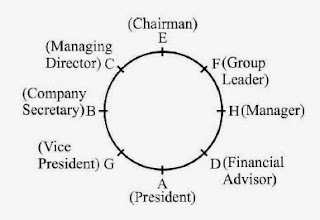
Eight colleagues, A, B, C, D, E, F, G and H, are sitting around a circular table facing the centre but not necessarily in the same order. Each one of them holds a different post — Manager, Company Secretary, Chairman, President, Vice President, Group Leader, Financial Advisor and Managing
Director. A sits third to the right of the Managing Director. Only two people sit between the Managing Director and H. The Vice President and the Company Secretary are immediate neighbours. Neither A nor H is a Vice President or a Company Secretary. The Vice President is not an immediate neighbour of the Managing Director. The Manager sits second to the left of E. E is not an immediate neighbour of H. The Manager is an immediate neighbour of both the Group Leader and the
Financial Advisor. The Financial Advisor sits third to the right of B. B is not the Vice President. C sits on the immediate right of the Chairman. A is not the Chairman. F is not an immediate neighbour of A. G is not an immediate neighbour of the Manager.
1. Who amongst the following sits third to the left of E?
1) Manager
2) G
3) A
4) Financial Advisor
5) B
2. Four of the following five are alike in a certain way based on the given arrangement and thus form a group. Which is the one that does not belong to that group?
1) F–Chairman
2) G–President
3) D–Manager
4) A–Financial Advisor
5) B–Managing Director
3. Who among the following is the President of the company?
1) A
2) C
3) H
4) G
5) D
4. Which of the following is true with respect to the given seating arrangement?
1) The Group Leader of the company is an immediate neighbour of the Vice President.
2) G sits second to the right of D.
3) The Group Leader and the Company Secretary are immediate neighbours.
4) The Chairman of the company sits to the immediate left of the Managing Director.
5) The Group Leader sits second to the left of D.
5. Which of the following posts does B hold in the company?
1) Chairman
2) Manager
3) Company Secretary
4) Vice President
5) Financial Advisor
6. Who among the following sits exactly between the Managing Director and H?
1) H and the Chairman
2) B and G
3) The Chairman and C
4) F and C
5) E and the Group Leader
7. Who among the following is the Group Leader?
1) C
2) F
3) G
4) H
5) A
Anwers:-
1.- 4
2.- 5
3.- 1
4.- 4
5. -3
6.- 5
7.- 2

Directions (Q. 1-5): Study the following informationcarefully and answer the given questions.
Study the following information and answer the following questions.
Study the following information and answer the following questions.
A, B, C, D, E, G, and I are seven friends who study in three different standards namely 5th, 6th, 7th such that not less than two friends study in the same standard. Each friend also has a different favourite subject namely History, Civics, English, Marathi, Hindi, Maths and Economics but not necessarily in the same order.
A like Maths and studies in 5th standard with only one other friends who likes Marathi. I studies with two other friends. Both the friends who study with I like language (here languages include only Hindi, Marathi and English).
D studies in 6th standard with only one person and does not like Civics. E studies with only one friend. The one who likes history does not study in 5th or 6th standard. E does not like languages. C does not like English, Hindi or Civics.
1. Which combination represents E's favourite subject and the standard in which he studies?
(1) Civics and 7th
(2) Economics and 5th
(3) Civics and 6th
(4) History and 7th
(5) Economics and 7th
2. Which of the following is I's favourite subject?
(1) History
(2) Civics
(3) Marathi
(4) Either English or Marathi
(5) Either English or Hindi
3. Who amongst the following studies in 7th standard?
(1) G
(2) C
(3) E
(4) D
(5) Either D or B
4. Which of the combination is definitely correct?
(1) I and Hindi
(2) G and English
(3) C and Marathi
(4) B and Hindi
(5) E and Economics
5. Which of the following subject does G like?
(1) Either Maths or Marathi
(2) Either Hindi or English
(3) Either Hindi or Civics
(4) Either Hindi or Marathi
(5) Either Civics or Economics
Answers:
1 (3)
2 (1)
3 (1)
4 (3)
5 (2)
Friends  Standard Subject
A         V       Maths
B         VII     Hindi/English
C         V       Marathi
D         VI      Economics
E         VI      Civics
G         VII     Hindi/English
I         VII     History
Answer


